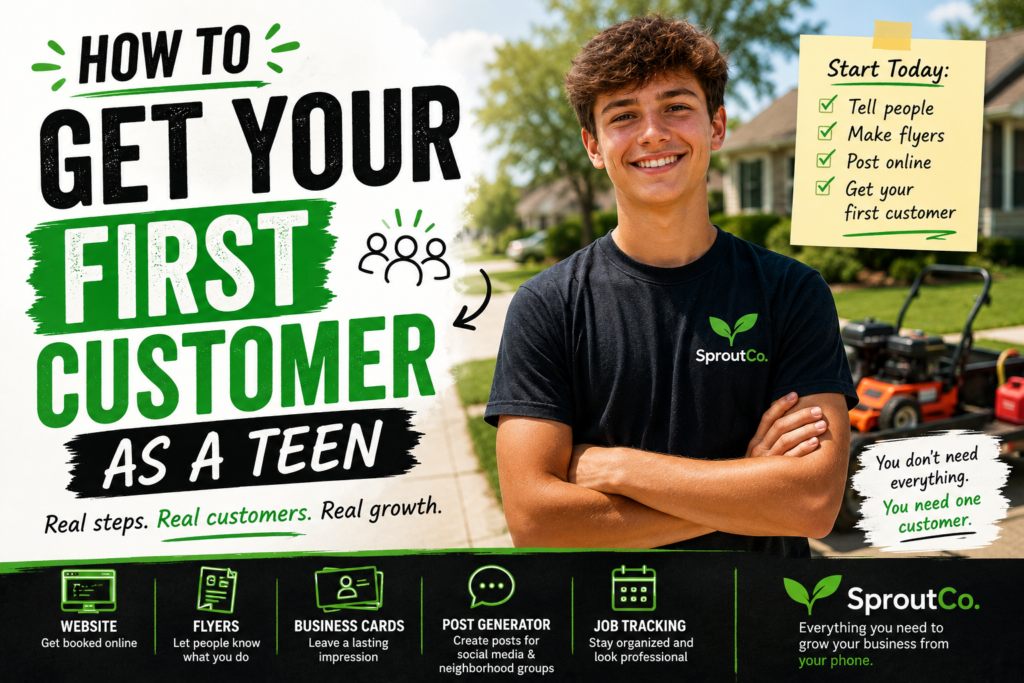
How to get your first customer as a teen is one of the biggest questions new entrepreneurs ask.
Starting a business sounds exciting… until you realize one thing:
You have no customers.
That’s where most people quit.
The good news? Getting your first customer usually has nothing to do with having the perfect logo, expensive equipment, or a huge social media following. Most neighborhood businesses start with one simple thing:
Someone saying yes.
Here are some ways to land your first customer and start building momentum.
1. Start With People You Already Know
Your first customer usually isn’t a random stranger.
Start with:
- Family
- Friends
- Neighbors
- Parents’ coworkers
- Sports teams
- School connections
Try saying something simple:
“Hey! I’m starting a lawn care business this summer. If you know anyone who needs help, let me know.”
You aren’t begging for work.
You’re letting people know you exist.
2. Create Flyers
Flyers still work.
Most people scroll past hundreds of things online every day, but a flyer sitting on their counter or handed directly to them gets noticed.
Keep it simple:
✅ Business name
✅ What you do
✅ Phone number
✅ QR code or booking link
✅ A clean photo
Bad example:
Professional Outdoor Property Solutions and Landscaping Services LLC
Better:
Jake’s Lawn Care
Mowing • Weed Removal • Yard Cleanup
People should understand what you do in about two seconds.
3. Post In Neighborhood Facebook Groups
Parents practically live in neighborhood groups.
Search for:
- “[Your city] community”
- “[Your city] neighborhood”
- “[Your city] local group”
Example post:
Hi everyone! My name is Jake and I’m 15 years old and starting a lawn care business this summer. I’m offering mowing and yard cleanup around the area. Feel free to message me if interested!
Keep it real.
People genuinely like supporting young entrepreneurs.
4. Leave Something Behind After Every Job
One customer can become multiple customers.
After every job:
- Leave a business card
- Leave a flyer
- Ask if they know anyone who could use help
Try:
“If you know anyone else who could use help, I’d appreciate it.”
Simple.
No pressure.
5. Ask For Repeat Work
Many people finish a job and disappear.
Don’t do that.
Try asking:
“Would you like me to come back every week?”
One weekly customer can turn into:
- $30/week
- $120/month
- $1,440/year
Repeat customers are what start turning side jobs into real businesses.
6. Don’t Wait Until Everything Is Perfect
A lot of people think:
I need a logo first.
Then:
I need business cards first.
Then:
I need a website first.
Then:
I need more supplies first.
Then nothing happens.
You do not need everything figured out before you start.
You need one customer.
Everything becomes easier after that.
Make It Easier With The Right Tools
Getting your first customer usually comes down to three things:
- Letting people know you exist
- Looking legitimate
- Making it easy for customers to contact or book you
That’s where tools can help.
With SproutCo you can create:
✅ A business website customers can book through
✅ Flyers for your neighborhood
✅ Business cards to leave after jobs
✅ AI-generated posts for social media and neighborhood groups
✅ Customer and job tracking from your phone
You don’t need all of those on day one, but having everything in one place makes things easier once customers start coming in.
Why Your First Customer Matters
Learning how to get your first customer as a teen is about more than making money. Your first customer teaches you how to talk to people, build confidence, and create opportunities for repeat business.
Most successful neighborhood businesses do not start with hundreds of customers. They start with one person willing to give you a chance.
Quick Action Plan
Today
- Tell 5 people you’re starting
- Create a flyer
- Join neighborhood groups
- Ask one person directly
This week
- Get your first customer
Next week
- Get your second customer
Final Thoughts
Your first customer is the hardest.
Your second gets easier.
Your tenth starts bringing referrals.
Most neighborhood businesses don’t start with hundreds of customers.
They start with one person saying yes.
Start there.